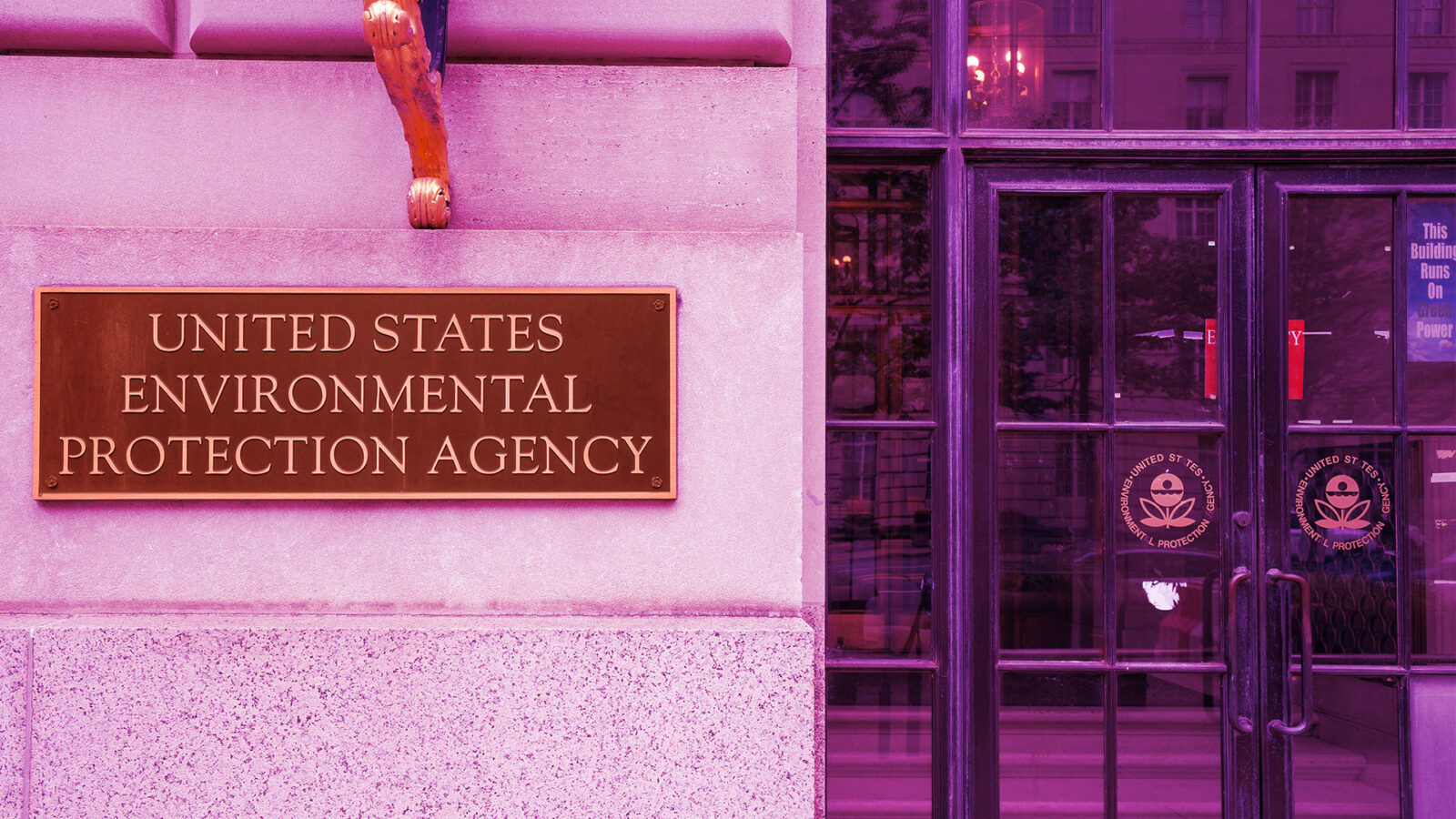
On February 12, EPA issued a final rule rescinding the 2009 Greenhouse Gas (GHG) endangerment finding. Under the Clean Air Act (CAA), the EPA is required to consider whether different types of pollutants can endanger public health or welfare. If the agency finds that a pollutant meets that standard, it is required under the CAA to promulgate emissions regulations for that pollutant. This endangerment finding, therefore, is the basis for the majority of the EPA’s GHG regulations. The 2009 endangerment finding was reached in response to a 2007 Supreme Court case, Mass. v. EPA, in which the Court interpreted the Clean Air Act as applying to greenhouse gases and compelled EPA to respond to state petitions to regulate them.
This decision will be fought in court. Significantly, how the agency argues that it is empowered to rescind the finding will have profound impacts for where this case resolves, and what the future of federal climate policy looks like. Climate XChange can offer preliminary observations of EPA’s action, with implications for federal policy moving forward:
This final rule may be litigated as a matter of law, not of science.
The agency appears to be primarily challenging an interpretation of law, not a finding of fact or science. According to the final rule, “[t]he EPA determines that CAA section 202(a)(1) does not authorize the Agency to prescribe emission standards in response to global climate change concerns….the Administrator is not basing this action on a new finding under CAA section 202(a)(1). Rather, we conclude that the EPA lacks statutory authority to resolve these questions under CAA section 202(a)(1).”
Under this argument, the agency may not be hinging its case on whether climate change is real and harmful, but whether the Clean Air Act gives the agency any tools to address it in any event.
This interpretation, however, appears to be in direct contradiction of Mass. v. EPA. The core holding of that decision was: “On the merits, the first question is whether ß202(a)(1) of the Clean Air Act authorizes EPA to regulate greenhouse gas emissions from new motor vehicles in the event that it forms a judgment that such emissions contribute to climate change. We have little trouble concluding that it does.”
While EPA’s final rule extensively discusses the uncertainties and qualifications laid out by the court in Mass. v. EPA, that core holding is not quoted anywhere in its 436 pages. Federal courts will be asked to reconcile the contradiction between Mass. v. EPA and yesterday’s final rule, which may be the deciding factor in the legal battle over the endangerment finding. Ultimately, this legal battle may only be resolved by the Supreme Court either overturning this holding from Mass. V. EPA, or refusing to.
If the Supreme Court overturns Mass. v. EPA, there are severe implications for federal climate regulations.
In yesterday’s final rule, the administration describes rescinding the endangerment finding, as well as greenhouse gas regulations on vehicles. These two actions are closely linked because the endangerment finding was reached in the context of a rulemaking on vehicle regulations. However, several other types of regulations have relied on the endangerment finding for their legal justification, including emissions limits on industrial and power plants, as well as government procurement practices. If this rescission holds, all regulations that used the endangerment finding as their legal basis would swiftly fall. Furthermore, a future administration may be foreclosed from making a new endangerment finding and re-regulating these same sources.
Some federal climate regulations, and future paths to regulation, may survive.
Some federal GHG regulations, fortunately, do not depend on the endangerment finding. For example, the American Innovation in Manufacturing Act (AIM) from 2020 explicitly calls for the EPA to phase out hydrofluorocarbons (HFCs) from certain manufacturing sources according to a fixed schedule. EPA has no duty or authority to conclude anything about HFCs under the AIM Act, and those pollution controls will remain in force.
Finally, even if SCOTUS were to reverse Mass. v. EPA, Congress anticipated a similar scenario several years ago when it was debating the Inflation Reduction Act (IRA). IRA Title VI made revisions to the CAA that defined six GHGs as “air pollutants.” This revision to the CAA may provide alternative grounds for EPA to regulate GHGs under the CAA in the future, without relying on the endangerment finding, though this theory is legally untested.
States still have broad authority over reducing GHG emissions and will continue to fill in the gaps where federal regulations fall short.
When the federal government backslides on climate regulation, the obligation to fill the gaps simply shifts to state governments. And statehouses, under this administration or any other, have the jurisdiction to pursue the broadest array of decarbonization opportunities. When the federal government backslides on tailpipe emissions, states can counter by regulating fuels and building out their charging networks. When the federal government backslides on industrial and power plant regulations, state governments can regulate those stationary sources to the same or a greater degree. And there are many areas of decarbonization policy, from buildings to natural gas systems to electricity to agriculture, where states have even stronger authority to act.
Climate XChange will remain focused on helping state-level policymakers and advocates lead the country on climate policy, no matter what comes of this final rule, or the litigation that is sure to follow it. As the legal challenges to the administration’s efforts advance, we will help make sense of the proceedings, with analysis on how they impact the federal landscape of GHG regulations and their implications for state climate policy.